


Latest news
Celebrating International Clinical Trials Day - a moment to recognise the vital role clinical trials play in transforming patient care and advancing medical discovery
Published: Wednesday 20 May 2026
International Clinical Trials Day 2026
Multinational trials: how the Global Cardiovascular Research Funders Forum (GCRFF) is supporting the fight against cardiovascular disease
On 20th May 1747, James Lind conducted the first known controlled clinical trial involving twelve sailors with scurvy, a medical landmark celebrated every year on Clinical Trials Day. Nearly three centuries later, a collaboration of cardiovascular funders is continuing Lind’s legacy, supporting multinational clinical trials to find cures for cardiovascular disease.
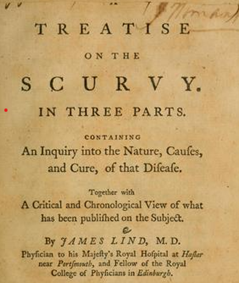
When naval surgeon James Lind surveyed the patients who would soon take part in his now famous clinical trial, he must have felt a deep sense of urgency for the trial to succeed. Writing in his Treatise of the Scurvy, published in Edinburgh in 1753, Lind describes the wretchedness of the sailors lying below deck on the HMS Salisbury — exhausted, debilitated and suffering with “…putrid gums, the spots and lassitude.”
At the time, scurvy was a much‑feared disease, responsible for more deaths at sea than enemy action. Determined to find a cure for the condition, Lind carried out what is widely regarded as the first controlled clinical trial in medical history. He compared different treatments in twelve sailors on board the Salisbury and found that those given two oranges and one lemon a day recovered quickly — a breakthrough that helped prove that citrus fruits could cure scurvy.
A new era of challenges
Although scurvy has largely been relegated to the history books thanks in part to Lind’s famous trial, today’s researchers are faced with similarly daunting challenges. Cardiovascular disease is the world’s biggest killer, and as people live longer, and risk factors like obesity, high blood pressure and diabetes become more common, tackling cardiovascular disease is an imperative for global health. To deliver the breakthroughs urgently needed, researchers must test new treatments in clinical trials that are large, diverse and robust enough to provide definitive answers. This means that researchers must work together to conduct ambitious trials across national borders.
The GCRFF Multinational Clinical Trials Initiative: an innovative model to support cardiovascular trials
Despite the clear need to conduct multinational trials to find new treatments for cardiovascular disease, securing funding for academic-led multinational trials is notoriously difficult. Multinational trials are expensive and investigators must apply for support from many different funding agencies, with their own priorities and expectations about trial protocols. With multiple funding bids, a negative funding decision can compromise the feasibility of delivering the trial. This roadblock was the impetus for the creation of the GCRFF Multinational Clinical Trials Initiative, established in 2021 by the Global Cardiovascular Research Funders Forum (a collaborative of major independent cardiovascular funders). The aim of the initiative is to help researchers secure funding for multinational trials by providing a platform to plan coordinated funding bids, and by improving the quality of proposals early in protocol development. The GCRFF has set up an international advisory panel of expert cardiovascular clinical academics, who scrutinise expressions of interest for multinational trial proposals, and strengthen the trial protocols with expert guidance and feedback. If a trial is deemed worthy, it receives GCRFF endorsement — a quality stamp that signals to national funders that the trial is regarded by the panel as potentially important, with a sound scientific basis and supported across borders. Although endorsement does not guarantee funding, it significantly boosts a trial’s prospects of a successful funding bid. Since its inception, the initiative’s funders have supported ten cardiovascular trials, most of which have opened to recruitment.
How GCRFF trials are addressing inequalities in women’s cardiovascular health
GCRFF-supported trials are already making a difference by addressing a long-standing inequality in cardiovascular research – the under-representation of women in cardiovascular clinical trials. Three GCRFF trials are specifically addressing important, unanswered questions in women’s cardiovascular health.

WARRIORS: transforming care for abdominal aortic aneurysms in women
GCRFF endorsement was pivotal in helping the WARRIORS principal investigators secure funding and establish an international collaboration of vascular surgeons from Europe, North America and Australia to deliver the trial. WARRIORS aims to improve outcomes for women with abdominal aortic aneurysm (AAA). Although women account for up to a fifth of AAA cases, almost everything we know about how to treat AAAs comes from studies in men.
And this matters: women have smaller aortas and an AAA in a woman is more likely to rupture at a smaller size. Also, women become ineligible for safer endovascular aneurysm repair (EVAR) at a smaller aneurysm size. Despite these differences, women are still offered repair only once their aneurysm reaches 5.5 cm — a treatment threshold based almost entirely on data from men. The WARRIORS trial will change this status quo. The trial is enrolling over a thousand women with small, asymptomatic AAAs (between 4 and 5.4 cm) and is comparing early EVAR with standard monitoring and repair (on reaching the 5.5 cm threshold) to see whether the incidence of aneurysm rupture and aneurysm-related mortality differs between the two approaches, and how each affects quality of life. Its findings will ensure that women at last receive evidence-based care for AAAs.

ROMA-Women: the world’s first cardiac surgery trial enrolling only women
A long-standing debate in cardiac surgery is whether performing coronary artery bypass (CABG) using multiple arterial grafts (MAG) leads to better long-term outcomes than using a single arterial graft plus vein grafts (SAG). This uncertainty is even greater in women, who account for a minority of participants in previous trials. Women are often older at the time of bypass surgery, have more advanced disease, and have smaller coronary arteries and arterial conduits, potentially making the MAG operation more technically challenging.
On the other hand, women often have diseased or varicosed saphenous veins and using arterial grafts for the procedure may be preferable. The GCRFF-endorsed ROMA-Women trial was conceived to answer this question. ROMA-Women is the first cardiac surgery trial in the world to enrol only women. Around two thousand women undergoing non-emergency CABG will be randomised to either MAG or SAG and will be followed for up to 4 years to assess survival, heart attack and stroke risk, repeat surgery and hospitalisation. By generating sex‑specific evidence for a procedure performed hundreds of thousands of times each year worldwide, ROMA-Women could improve cardiac surgery outcomes for many millions of women.
SCAD-ALIGN: improving outcomes after spontaneous coronary artery dissection
Spontaneous coronary artery dissection (SCAD) — where a dissection of the coronary artery by an intramural haematoma results in myocardial ischaemia — is a leading cause of heart attacks in younger women. It often affects those who are otherwise healthy and have none of the usual cardiovascular risk factors. Despite its impact, SCAD remains under recognised and poorly understood. One area of uncertainty is the choice of antiplatelet therapy after a SCAD event. Although dual antiplatelet therapy (DAPT) is standardly prescribed after a heart attack caused by obstructive coronary artery disease, there are important differences in the underlying pathology of SCAD that raise questions over the appropriateness of DAPT in this setting. SCAD is caused by a tear in the artery wall, not a clot in the coronary artery, and some clinicians believe that intensive DAPT, which prolongs bleeding time, could lead to additional bleeding into the coronary artery wall and worse outcomes. SCAD-ALIGN will address this uncertainty. The trial will recruit over three thousand SCAD patients who have been managed conservatively, and will compare single antiplatelet therapy (SAPT) for 3 months only with DAPT for 3 months followed by 9 months of SAPT, to find out which approach is safer and more effective in preventing cardiovascular events and bleeding events. Its findings could transform care for SCAD patients.
Trials worth the effort
There is no doubt that the trials supported by the GCRFF funders will be challenging to deliver. The trials teams will need to navigate complex regulatory frameworks and curate large databases across borders. Many of the GCRFF trials are tackling problems in hard-to-recruit patient populations and will require strong engagement with patient communities and a sustained effort from researchers to complete successfully.
But these collective endeavours will be worth the effort. The GCRFF trials will strengthen research capacity internationally and generate evidence that is generalisable across healthcare systems. Crucially, they will deliver answers to clinical questions that could not be addressed by researchers working in a single country alone, bringing lasting benefits for cardiovascular patients and clinicians across the globe.
Related links
GCRFF Multinational Clinical Trials Initiative
Active trials endorsed by the GCRFF
Get in touch
For any queries about the multinational clinical trials initiative and the application process, please contact GCRFFtrials@bhf.org.uk.
For any other queries regarding the GCRFF, please get in touch at jacksonz@bhf.org.uk